

A prolific February
11 books I read in the month of Feb, and whether they're worth buying, borrowing, or skipping

I love The Cut’s book newsletter, Book Gossip. Typically towards the bottom, they spotlight a handful of books that land on a recommendation of: Buy or Borrow (or put on hold at the library) or Skip. I find this to be immensely useful and valuable guidance, particularly for my wallet.
February was a prolific month of reading for me. In this post, I’m stealing The Cut’s model to share all the books I read last month, and whether they’re worth buying, borrowing, or skipping. Enjoy!
1. The Names by Florence Knapp
The concept of this one felt very original, and intrigued me. It opens on a mother considering three different names for her newborn baby boy. Option 1: carrying on the family name of her abusive husband. Option 2: a name chosen by his big sister. Option 3: a name she loves all her own. The book follows all three parallel universes over the decades to come. So, what’s in a name? Quite a lot, argues this book. I will say, the tone turned me off at the beginning, but I‘m glad I stuck it out.
→ Borrow
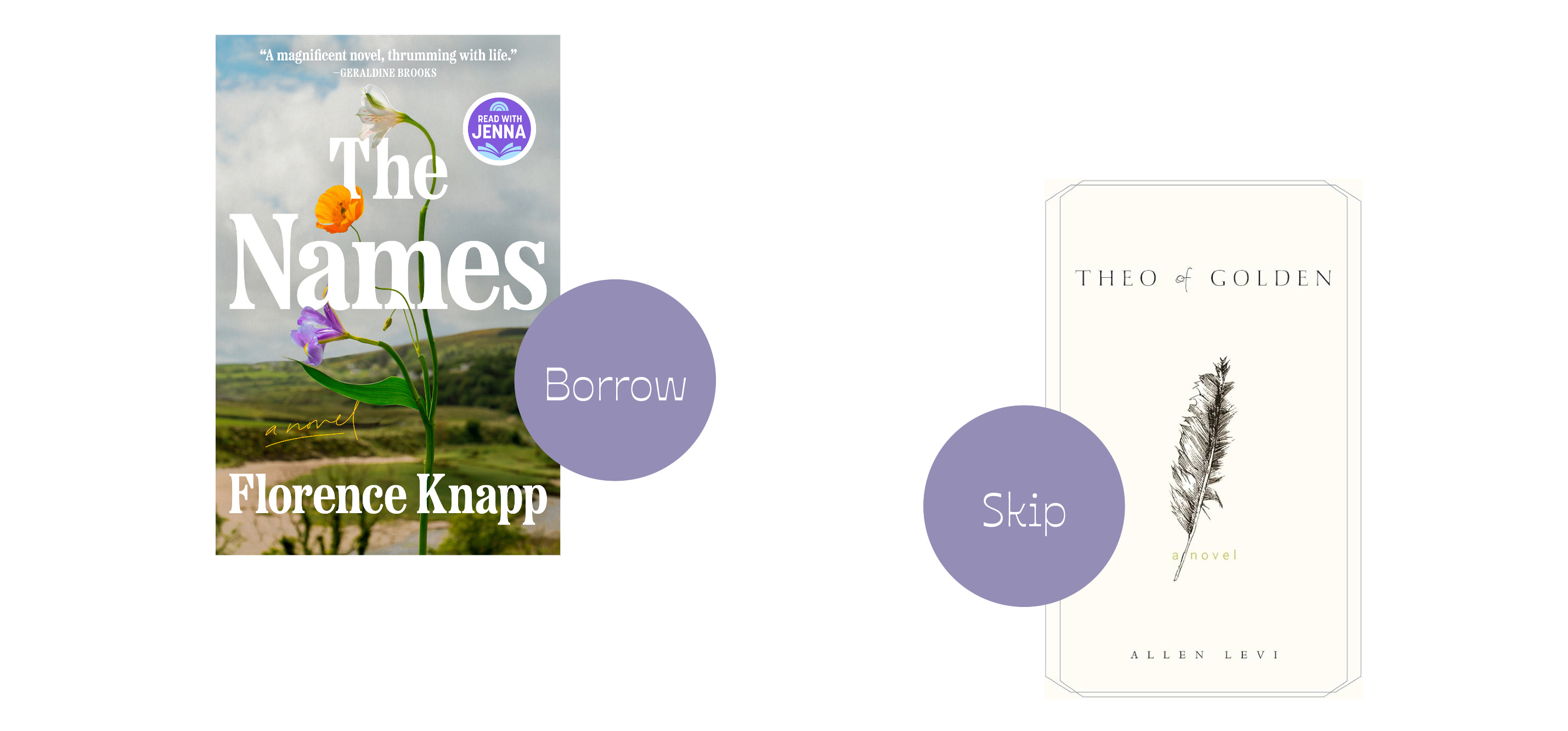
2. Theo of Golden by Allen Levi
This book has a Goodreads rating of 4.57, which, when you’ve been in the game as long as I have, you know is an astonishingly high score. I hate to report that the good people of Goodreads let me down. I appreciate the breadth and depth of the author’s ambition here, but it fell short. It felt forced. To work, the main character had to have his secrets. But in doing so, he remained surface-level and unknowable - he didn’t earn the right to leave so many questions unanswered to the reader for so long. It was sweet, sure, but not it, for me.
→ Skip
3. Nothing Random: Bennett Cerf and the Publishing House He Built by Gayle Feldman
This book is a doorstop, a tome. Clocking in at 1,027 pages, it’s the biography of Bennett Cerf, publisher and founder of Random House. I picked this up because I had read that Cerf was Dr. Seuss’s publisher for a good portion of his career, but also Ayn Rand’s - the juxtaposition of output there was intriguing. Not to mention, Gertrude Stein, William Faulkner, Truman Capote… What I liked most about this book, though, was learning how publishing, of which this man was at the helm, intersected with culture. This is for the publishing heads, not even necessarily book-lovers, but those interested in learning about the historical context surrounding the institutions that bring us the books we love.
→ Borrow if you’re a literary nerd, Skip if not
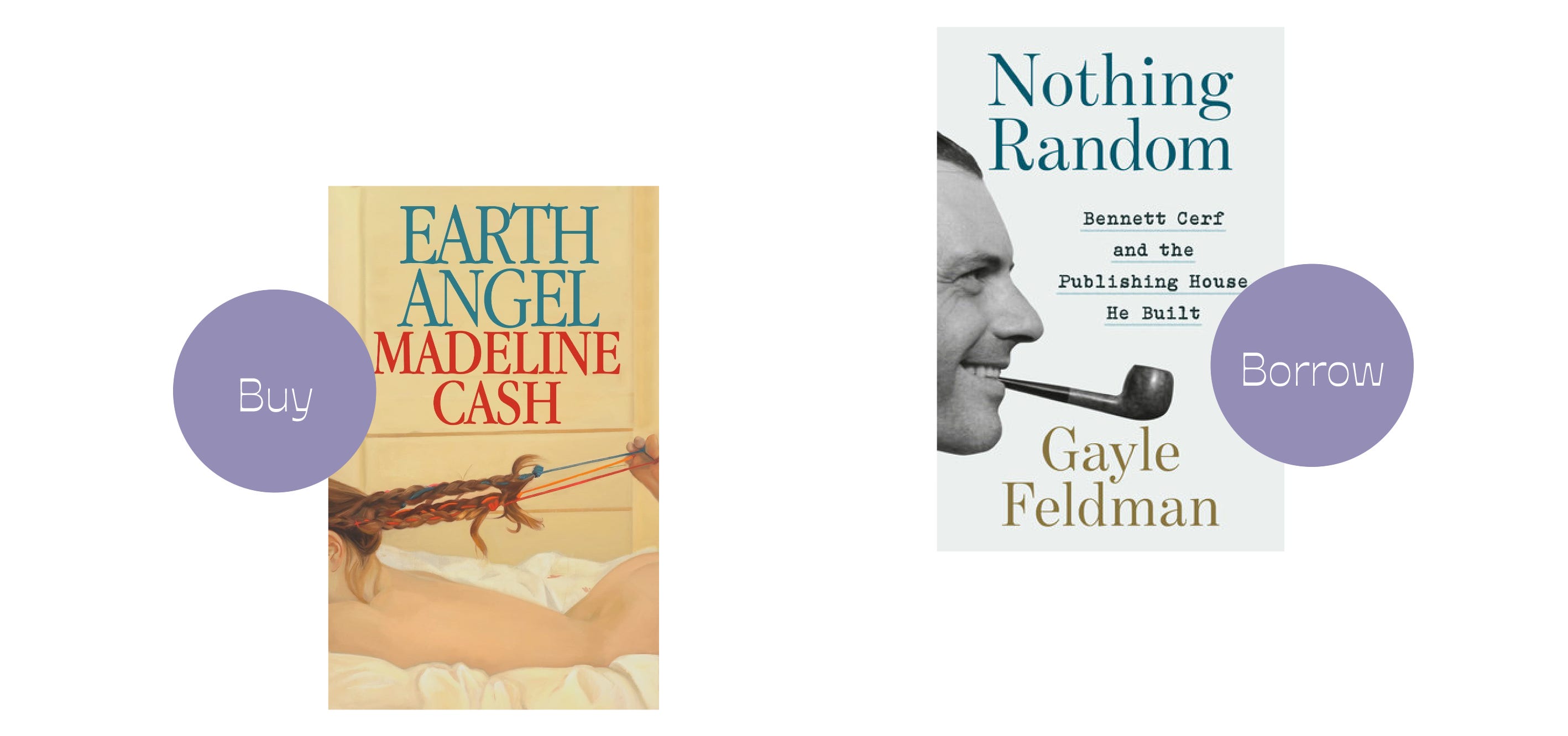
4. Earth Angel by Madeline Cash
Off the back of my favorite book I read last year, Lost Lambs, I was craving more from the mind of Madeline Cash. Her characters are so WEIRD and her plot points so absurd, in the very best way, especially when set against her masterfully nonchalant writing. This very enjoyable set of stories are united by a particular flavor of cynicism, bordering on nihilism. Not better than Lost Lambs, but similar style and tone, and can be read in one setting - what’s not to love?
→ Buy
5. Wuthering Heights by Emily Brontë
I know you haven’t heard enough Wuthering Heights discourse. Obviously, as I couldn’t possibly be more of the movie’s target audience, I had to read the source material from 1847, which evaded me in school. Which is actually fine by me because my brain was hanging on for dear life to the writing at my age now: the language demands a lot of you. One of the many interesting parts about the book is how it’s told from perspectives other than Heathcliff and Cathy; we never actually hear directly from the source. Like the flame was too hot to touch, it had to be told from a distance. And of course, the book gives us a whole new generation that the movie does not. I could go on forever, maybe I will one day.
→ Buy (a chic mass-market paperback on Thriftbooks like I did)
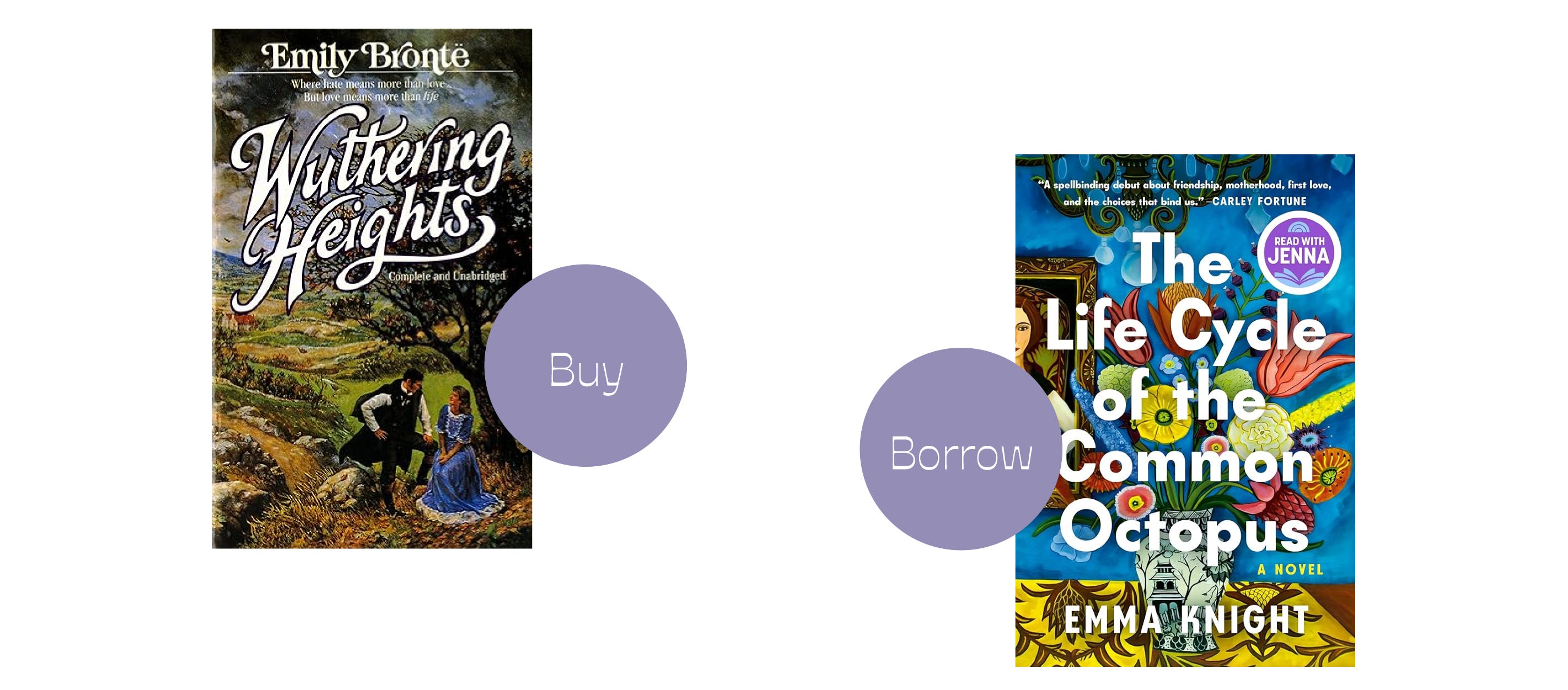
6. The Life Cycle of the Common Octopus by Emma Knight
A lovely little coming-of-age novel about a girl from Canada, who goes to Scotland for college. She reconnects with her parents’ family friends, and realizes there’s a lot of history she doesn’t know. Such is life at that raw, formative age. I was very fond of the narrator, I liked her vibe. But the book overall, was a bit forgettable for me.
→ Borrow
7. The Hour of the Star by Clarice Lispector
This was my first Clarice Lispector and… I love her. This book is the last one she wrote before she died, at her fullest writing powers, one could argue. It’s the story of a poor woman living in Rio, told through the lens of a male narrator that’s equal parts concerned and judgmental about her. It’s unlike anything I’ve ever read. It’s conversational with a stream of consciousness style, and very deep and poignant too. I have more to say about this one, soon. It made me so excited to read the rest of her writing.
→ Buy!
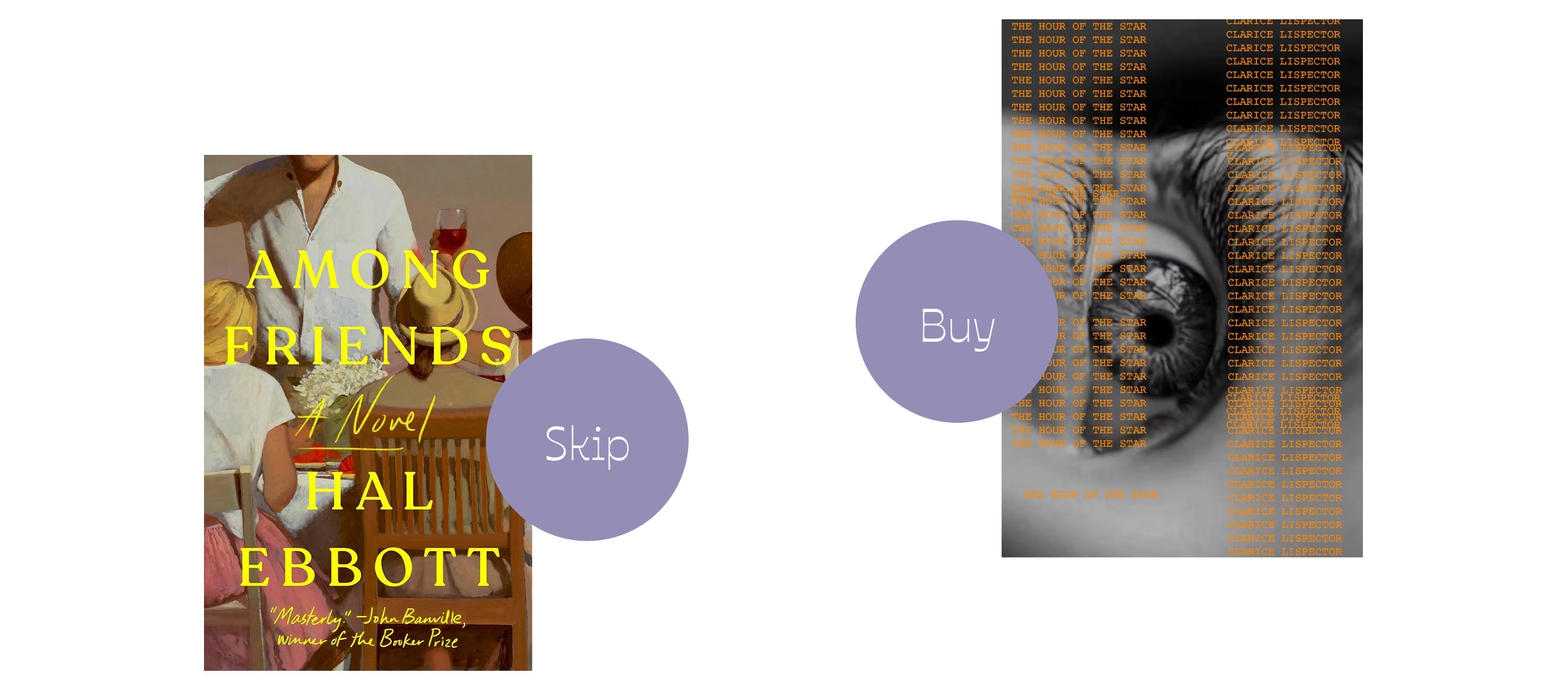
8. Among Friends by Hal Ebbott
Among Friends is about two couples who’ve been friends for decades, and a weekend away upstate where everything shifts. This book gave me the ick. The writing was good, almost beautiful. But the story line, the unveiling of the Thing That Happens, the way the characters handled it… all didn’t sit right. A review on Goodreads said it better than I ever could: “This one earns its spot in the literary canon of novels about a crisis easily averted if the two dudes involved just admitted they wanted to fuck each other.”
→ Skip
9. Heated Rivalry by Rachel Reid
Would I have read this before the show? No, simply because romance isn’t traditionally my bag, but what a joy this is! I’m just feeling really happy for everyone involved. The hyper-niche genre of gay hockey smut getting its moment, the actors who seem like genuine rays of sunshine thriving at fashion shows and celeb events, the conversations it’s sparked for the LGBTQ+ community within the world of sports. Brava.
→ Borrow (because you know one of your girlfriends has it to loan you)
10. The Colony by Annika Norlin
I wrote here about how much this book has to offer. It’s the story of a group of people communally living, beyond the bounds of society in a Swedish forest. This book is phenomenal on every level: from the sentences themselves, to the existential questions it poses.
→ Emphatically, buy
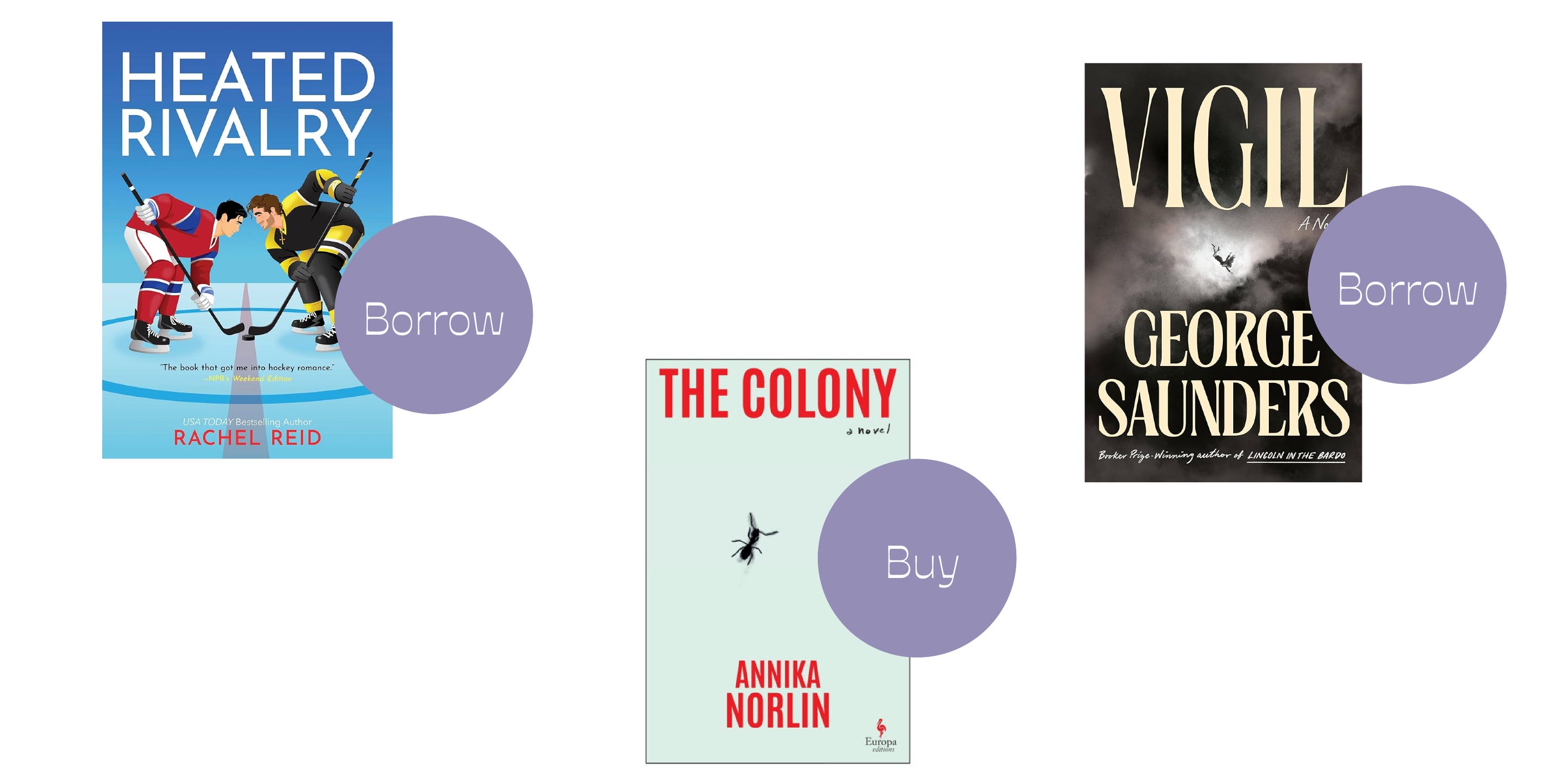
11. Vigil by George Saunders
Saunders is so unique, his books so inventive. This one is his creative take on purgatory: an imagination of the mechanics behind the shift from life to death. A sweet, but quietly resentful woman has been tasked with ushering a billionaire into the afterlife. He has an ego the size of his mansion, brashly believing in his contribution to the corporate world, the country, the planet - the book questions this in a quintessentially Saunders kind of way.