

Is ignorance bliss?
Two books by two Austrian writers exploring abrupt fame and fortune: Late Fame and The Post Office Girl

There were several writers at the heart of this time period. Many of them were members of a literary group called Young Vienna. Imagine a bunch of white men (with an abysmally small number of anyone non-white, non-man, I am sure) sitting at coffee houses for hours on end: shuffling between reading newspapers, penning letters, exchanging ideas, writing novels, smoking cigarettes, arguing for arguing’s sake. Arthur Schnitzler and Stefan Zweig were two of them.
Schnitzler’s most famous novel is probably Dream Story, a hallucinogenic trip of a tale that Stanley Kubrik’s Eye Wide Shut is based on. Zweig’s most famous is likely his memoir: The World of Yesterday, a work that captured, in all its complexity, the high highs and low lows of living in Europe before, during, and between the world wars.
But this is not about those books. This is about two others, both of which I had a truly amazing time reading: Arthur Schnitzler’s Late Fame and Stefan Zweig’s The Post Office Girl.
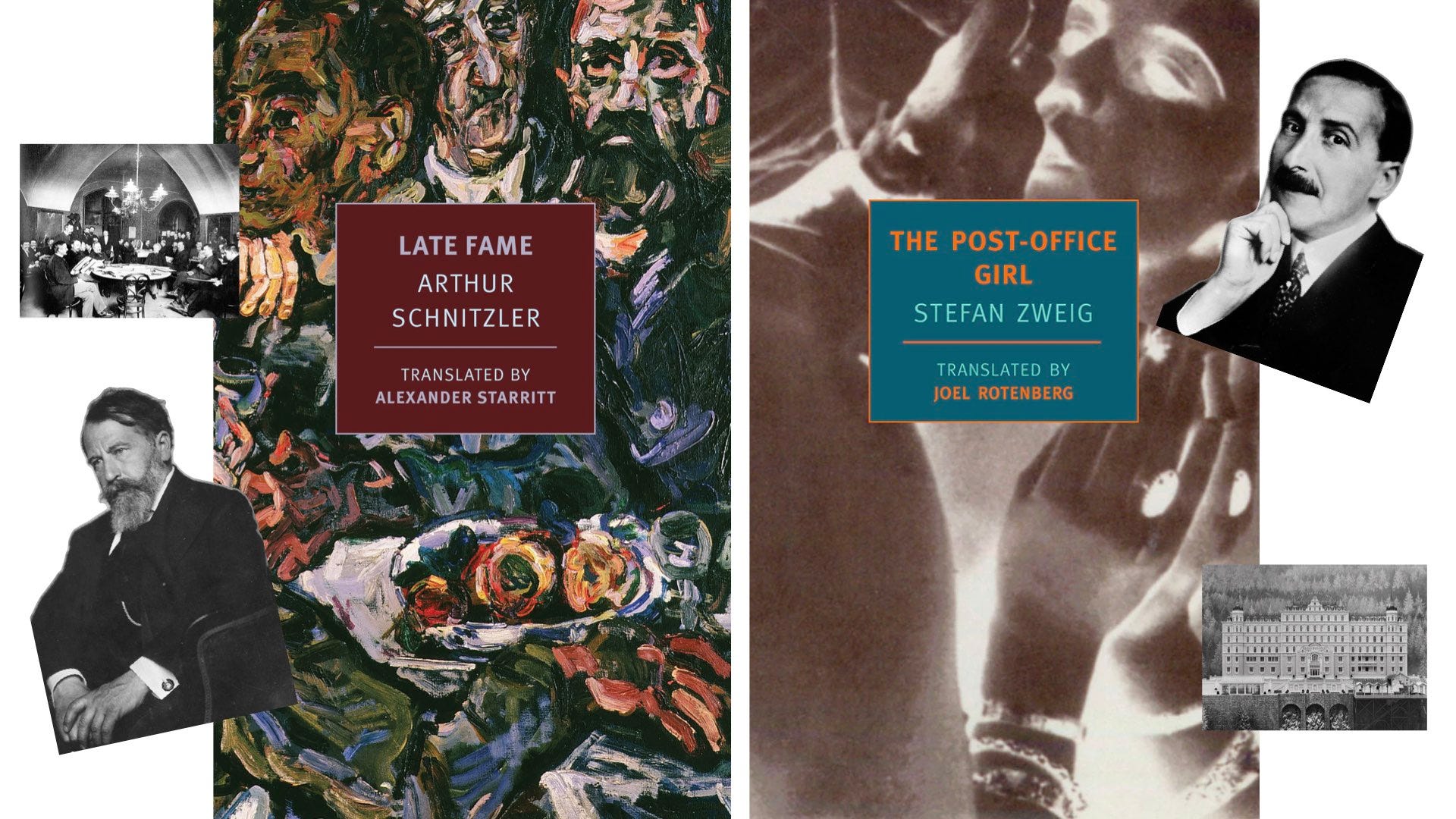
Both of these novels begin with characters content in, if not unaware of, their mundanity. Both pluck those protagonists from obscurity, and set them on a path to more. And both see their characters altered in the end, painting a portrait where ignorance to that shiny kind of wealth and notoriety, possibly is its own kind of bliss.
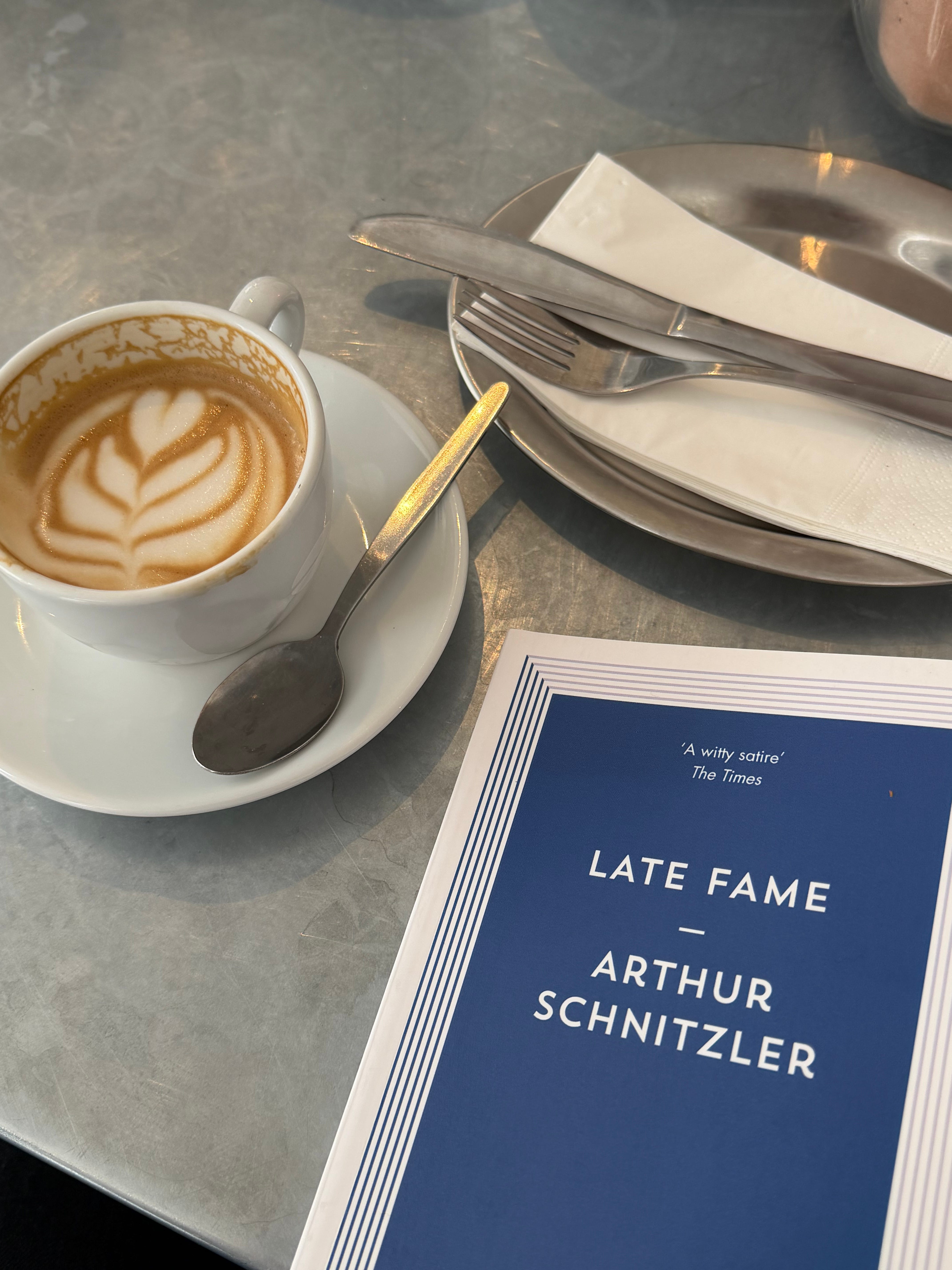
Late Fame is set in the 1890s, in the heart of Vienna. The central character is Eduard Saxberger: a civil servant approaching retirement. On a regular day like all the others, a young man approaches him asking if he is THE Saxberger, the one who wrote a certain book of poetry decades ago. He is, indeed, despite feeling a million miles away from that version of himself. Upon invitation, he’s quickly enveloped by a group of eager young writers, based on the real-life Jung-Wein or “Young Vienna” of which Schnitzler and Zweig were both a part.
While he wraps his mind around the idea of anyone genuinely seeing him as a capital-p Poet, it doesn’t take much convincing for him to begin frequenting the coffee house for healthy debate among fellow writers night after night. They ask for new poems; he promises. This attention is a brand new sensation. Their fervor is enough for him to start believing what they see, although it can be hard to tell exactly what that is.
The novel is a satire, but not necessarily a caricature. The group — and the world it’s representing — is pretentious, yes, but the allure makes sense. To feel heard, noticed; to feel a part of likeminded people and a part of a burgeoning culture. And for Saxberger, well, it’s only human nature to chase a feeling of recognition for a dream you’ve long since put to bed, even if it is manufactured.
All the while, an emptiness that feels modern seeps through, which I found quite compelling. This novel, of course, far predates social media, yet captures the very same woes: a cacophony of self-ordained professionals saying so much, all the time, yet meaning very little. A sound bite at the coffee house.
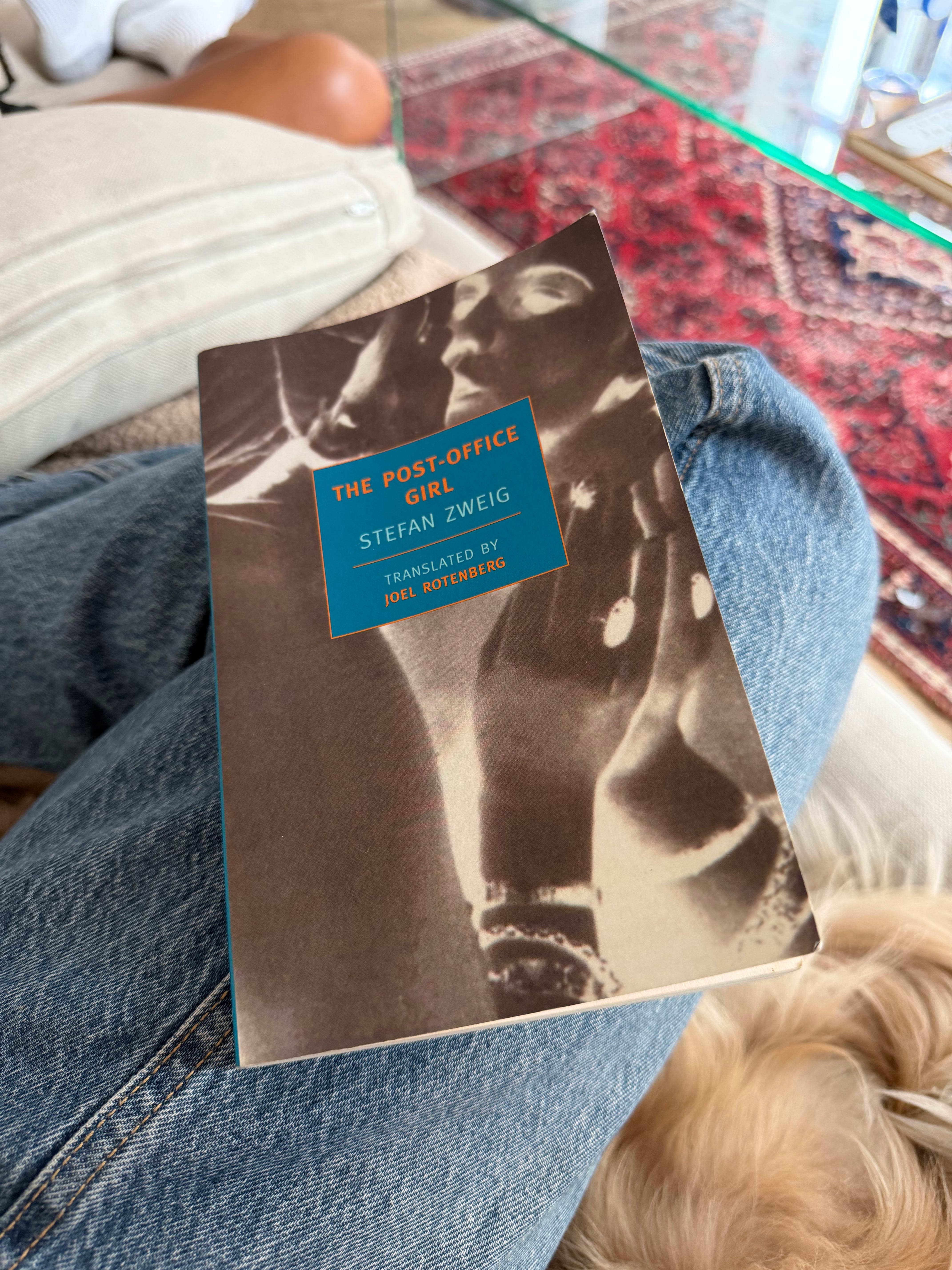
The Post Office Girl was written in the 1930s, with a noticeable post-war pessimism. It’s about Christine, a woman working in a post office in a modest village a couple hours outside of Vienna. She recognizes her relative poverty; she manages. Until one day she receives a letter from a long-lost aunt, offering Christine a place with her and her wealthy American husband on their vacation in the Swiss Alps. She’s dubious, and curious.
She accepts the invitation. She arrives entirely out of her depth. And with the help of her aunt’s wardrobe and the local salon, she assimilates swiftly. Like a child, she is dazzled by this new world: the hotel’s furnishings, its meals, its people, its aura, its pace. They say time is a luxury. The vast difference in the relationship to time struck me, and speaks volumes: suffering through each passing minute at the post office, and luxuriating as the hours dance away at the hotel. Getting a taste of that is bound to change a person.
Everything at the hotel is so alien. This experience, so formative. She, so malleable. She loves it, and they love her. For the first time, she’s noticed.
There’s an enormity to the experience, and a fragility, too. The second half of the book holds a very different energy that I found fascinating to watch unfold and don’t want to spoil. When she returns to the village, her reality is drained of any dredges of color it had before, everything gray in comparison to those two weeks in the Alps. To me, it seemed like she wouldn’t even let herself wonder: to keep on living, was that flash of an experience worth it?
Both of these novels are so grounded in their own time period, and timeless all the same. Their writing is clear and beautiful, in a way that makes their being penned a century ago feel surprising. They’re especially intriguing when put in the context of the somewhat dramatic circumstances surrounding their publishing. Late Fame barely survived the Nazi book burnings, and The Post Office Girl was published posthumously before it was technically completed. He didn’t even leave instructions for the novel before his planned suicide pact with his wife in 1942, meaning we can never fully know his intentions for Christine’s fate.
Saxberger and Christine are both fundamentally changed by the inciting experiences in these novels: the literary group, the vacation. They interrogate wealth, fame, poverty, criticism, and other dynamics and forces that shape how, and in what ways, an individual is really, truly seen.
Extraordinary experiences thrust upon ordinary people — and who’s to say if they’d have it another way?
Love, Shelby
PS — I picked Late Fame up from Shakespeare & Company in Vienna because I wanted to read an Austrian author while I was there. I had no idea a movie adaptation was coming… kismet ✨
And! Wes Anderson cited Post Office Girl as a big inspiration for The Grand Budapest Hotel.
